Friday, November 16, 2018

Reading - 18C American Woman with a Book

1790 Denison Limner probably Joseph Steward (American artist, 1753-1822) Mrs Elizabeth Noyes with a journal or book

In 1800, a magazine called The Columbian Phenix and Boston Review reported that “no country on the face of the earth can boast of a larger proportion of inhabitants, versed in the rudiments of science, or fewer, who are not able to read and write their names, than the United States of America.”

Thursday, November 15, 2018

Geo Washington notes the Possible Excesses of Political Parties - Even tho Women could not Vote in the USA until 1920...


Women could read what worried President George Washington about the possible excesses of political parties in the new USA.  Although known as his "Farewell Address," Washington never spoke these words before an audience. The president arranged with David C. Claypoole, editor, & proprietor of Philadelphia's Daily American Advertiser to print his letter in the newspaper in September of 1796.

"The disorders & miseries which result gradually incline the minds of men to seek security & repose in the absolute power of an individual; & sooner or later the chief of some prevailing faction, more able or more fortunate than his competitors, turns this disposition to the purposes of his own elevation, on the ruins of public liberty.

"Without looking forward to an extremity of this kind (which nevertheless ought not to be entirely out of sight), the common & continual mischiefs of the spirit of party are sufficient to make it the interest & duty of a wise people to discourage & restrain it.

"It serves always to distract the public councils & enfeeble the public administration. It agitates the community with ill-founded jealousies & false alarms, kindles the animosity of one part against another, foments occasionally riot & insurrection. It opens the door to foreign influence & corruption, which finds a facilitated access to the government itself through the channels of party passions. Thus the policy & the will of one country is subjected to the policy & will of another."

Wednesday, November 14, 2018

Reading - 18C American Woman with a Book

1790 Denison Limner probably Joseph Steward (American artist, 1753-1822) Elizabeth Denison holding a small book.

Thomas Jefferson drafted a Virginia Assembly bill in the 1770s, titled “A Bill for the More General Diffusion of Knowledge."  Jefferson believed, "Those entrusted with power have, in time, and by slow operations, perverted it into tyranny; and it is believed that the most effectual means of preventing this would be, to illuminate, as far as practicable, the minds of the people of large."  He proposed a series of public schools at which “reading, writing, and common arithmetick” would be taught to “all the free children, male and female.”

Monday, November 12, 2018

Reading - 18C American Woman with a Book

1789 Christian Gullager (American artist, 1759-1826) Rebecca Salisbury Waldo (Mrs Daniel Waldo) with a journal

Scholar Kenneth Lockridge & his successors showed that literacy was higher in New England & the mid-Atlantic colonies than in the South, & higher in the cities than in the countryside. Traders & shopkeepers were more literate than farmers. 

Sunday, November 11, 2018

The Revolution changes Martha Washington From A Farmert's Wife ti A Military Wife

MW 1796 Gilbert Stuart (1755-1828). Martha Dandridge Custis Washington (1731-1802)  (Daniel Parke Custis) (George Washington)

Martha Dandridge's first husband was a man much older than herself & her second was almost a year younger. Before she embarked upon her second matrimonial venture she had been the mother of four children, & having lost two of these, her husband, her father & mother, she had known, though only twenty-seven, most of the vital experiences that life can give...she was well trained in social & domestic accomplishments, could dance & play on the spinet--in short, was brought up a "gentlewoman." That she must in youth have possessed charm of person & manners is indicated by her subjugation of Daniel Parke Custis, a man of the world & of much greater fortune than herself, & by her later conquest of Washington...

Edmund Pendleton relates that when on his way to the Continental Congress in 1774 he stopped at Mount Vernon, "She talked like a Spartan mother to her son on going to battle. 'I hope you will all stand firm--I know George will,' she said..."  ...at Valley Forge she worked day & night knitting socks, patching garments & making shirts for the loyal band of winter patriots who stood by their leader & their cause in the darkest hour of the Revolution.

A Norristown lady who paid her a call in the little stone house that still stands beside the Schuylkill relates that "as she was said to be so grand a lady, we thought we must put on our best bibs & bands. So we dressed ourselves in our most elegant ruffles & silks, & were introduced to her ladyship. And don't you think we found her knitting with a specked apron on! She received us very graciously, & easily, but after the compliments were over, she resumed her knitting..."

Mrs. Washington not only managed the Mount Vernon household, but she looked after the spinning of yarn, the weaving of cloth & the making of clothing for the family & for the great horde of slaves. At times, particularly during the Revolution & the non-importation days that preceded it, she had as many as sixteen spinning-wheels in operation at once. The work was done in a special spinning house, which was well equipped with looms, wheels, reels, flaxbrakes & other machinery. Most of the raw material, such as wool & flax & sometimes even cotton, was produced upon the place & never left it until made up into the finished product...

A great variety of fabrics were produced: "striped woolen, wool plaided, cotton striped, linen, wool-birdseye, cotton filled with wool, linsey, M's & O's, cotton Indian dimity, cotton jump stripe, linen filled with tow, cotton striped with silk, Roman M., janes twilled, huccabac, broadcloth, counter-pain, birdseye diaper, Kirsey wool, barragon, fustian, bed-ticking, herring-box, & shalloon."  In non-importation days Mrs. Washington even made the cloth for two of her own gowns, using cotton striped with silk, the latter being obtained from the ravellings of brown silk stockings & crimson damask chair covers.

The housewife believed in good cheer & an abundance of it, & the larders at Mount Vernon were kept well filled. Once the General protested to Lund Washington because so many hogs had been killed, whereupon the manager replied that when he put up the meat he had expected that Mrs. Washington would have been at home & that he knew there would be need for it because her "charitable disposition is in the same proportion as her meat house..."

Mrs. Carrington, who, with her husband, one of the General's old officers, visited Mount Vernon about this time wrote: "Let us repair to the Old Lady's room, which is precisely in the style of our good old Aunt's--that is to say, nicely fixed for all sorts of work--On one side sits the chambermaid, with her knitting--on the other, a little colored pet learning to sew, an old decent woman, with her table & shears, cutting out the negroes' winter clothes, while the good old lady directs them all, incessantly knitting herself & pointing out to me several pair of nice colored stockings & gloves she had just finished, & presenting me with a pair half done, which she begs I will finish & wear for her. Her netting too is a great source of amusement & is so neatly done that all the family are proud of trimming their dresses with it..."

Like her husband, Mrs. Washington was an early riser, & it was a habit she seems to have kept up until the end. She rose with the sun & after breakfast invariably retired to her room for an hour of prayer & reading the Scriptures. Her devotions over she proceeded with the ordinary duties of the day.

She seems to have been somewhat fond of ceremony & to have had a considerable sense of personal dignity. A daughter of Augustine Washington, who when twelve years of age spent several weeks at Mount Vernon, related when an old woman that every morning precisely at eleven o'clock the mistress of the mansion expected her company to assemble in the drawing-room, where she greeted them with much formality & kept them an hour on their good behavior. When the clock struck twelve she would rise & ascend to her chamber, returning thence precisely at one, followed by a black servant carrying an immense bowl of punch, from which the guests were expected to partake before dinner. Some of the younger girls became curious to discover why her "Ladyship" retired so invariably to her room, so they slipped out from where she was entertaining their mothers, crept upstairs & hid under her bed. Presently Lady Washington entered & took a seat before a large table. A man-servant then brought a large empty bowl, also lemons, sugar, spices & rum, with which she proceeded to prepare the punch. The young people under the bed thereupon fell to giggling until finally she became aware of their presence. Much offended, or at least pretending to be, she ordered them from the room. They retired with such precipitancy that one of them fell upon the stairway & broke her arm...

She was beloved by her servants & when she left Mount Vernon for New York in 1789 young Robert Lewis reported that "numbers of these poor wretches seemed most affected, my aunt equally so."

From: George Washington: Farmer  Paul Leland Haworth (1876-1936) Ch 13  The Farmer's Wife

Veterans' Day


Saturday, November 10, 2018

Reading - 18C American Woman with a Book

1789 Christian Gullager (American artist, 1759-1826) Martha Saunders (Mrs Nicholas Salisbury) with glasses & a book

Historian Gloria L. Main  has written, “Historians have tended to treat female literacy as a minor postscript to the larger tale of literacy’s spread, but the story for women has important dimensions of its own.” Jefferson’s plan for a public school system included girls, but that was not typical of 18C education and women’s literacy lagged behind men’s. Scholar Kenneth Lockridge’s figures make the case: while male literacy in New England rose from 60 percent in the late 17C to 90 percent by the early days of the Republic, he estimated female literacy in the same period as rising from 31 percent to 48 percent—roughly half the rate of males.

Friday, November 9, 2018

In Business - Sarah Updike Goddard (c. 1701-1770) Printer & Mother

Printer's workshop (18th century woodcut). British Library. Shelfmark Harl.5915.(215.)

Sarah Updike Goddard (c. 1701-Jan. 5, 1770), printer, was born at Cocumscussuc, one mile north of the village of Wickford, R.I., to Lodowick & Abigail (Newton) Updike. Her grandfather, Gysbert op Dyck, had emigrated from Wesel, Germany, to Lloyd’s Neck, Long Island, in 1635. In 1643 he was married to Katherine Smith, daughter of an early Rhode Island settler, Richard Smith. Their son, Lodowick (1646-1737), moved in 1664 from New Amsterdam to Kingston, R.I., where he anglicized his surname to Updike, became a substantial landowner, & held several public offices. He had one son & five daughters, Sarah among them; the son, Daniel, served for several years as attorney general of the colony of Rhode Island.

Sarah’s education included not only the subjects usual to the day but also French & Latin from a French tutor in the Updike household. On Dec. 11, 1735, she was married to Dr. Giles Goddard of Groton, Conn., like herself a member of the Church of England, & he practiced medicine & was for many years postmaster. Of their four children, only two, Mary Katherine & William, lived to adulthood. Presumably Mrs. Goddard taught the two children herself, though William later mentioned having in a school as a child. On Jan. 31, 1757, Giles Goddard died, leaving an estate valued at 780 pounds. When William Goddard in 1762 started Providence’s first printing shop & newspaper, the Providence Gazette, the money (300 pounds) too set up the business came from his mother, who in the same year moved from New London to Providence. Both Mrs. Goddard & her daughter doubtless worked in the shop, since both became accomplished printers.

Lacking enough subscribers, William Goddard temporarily ceased publication of the Providence Gazette on May 11, 1765, & moved to New York, but the Providence printing office continued to function under the supervision of his mother. During the rest of 1765 the shop issued the annual West’s Almanack & various pamphlets under the imprint “S. & W. Goddard.” When, on Aug. 9, 1766, the Providence Gazette was revived, it was under the auspices of “Sarah Goddard & Company,” Sarah thereby becoming Providence’s second printer. She continued to print the weekly newspaper & run a bookstore & bookbindery until Nov. 5, 1768, when the business was sold to a partner, John Carter, for $550. Her bluestocking inclinations are revealed by her printing in 1766 the first American edition of the Letters of the Right Honourable Lady Mary Wortley Montagu.

After the sale of her Providence business Sarah Goddard joined her son in Philadelphia, where he was printing the Pennsylvania Chronicle; her financial assistance aided him in his struggle with his silent partners, Joseph Galloway & Thomas Wharton. In Philadelphia, Sarah Goddard remained mostly in the background, though she occasionally supervised the shop during William’s frequent trips to New England in 1769.

She died in Philadelphia & was buried in the Christ Church burial ground. An obituary in New-York Gazette of Jan. 22, 1770, eulogized “her uncommon attainments in literature,” “sincere piety,” “unaffected humility,” “easy agreeable chearfulness & affability,” & “sensible & edifying conversation.” In spite of her restless & selfish son, her daughter, Mary Katherine Goddard, carried on the family tradition. 

This posting based, in part, on information from Notable American Women edited by Edward T James, Janet Wilson James, Paul S Boyer, The Belknap Press of Harvard University, Cambridge, Massachusetts. 1971. 

Thursday, November 8, 2018

Reading - 18C American Woman with a Book


1787 Charles Willson Peale (American artist, 1741-1827) Mary Chew (Mrs Thomas Elliott Chrysler) reading with glasses

Reading in the colonies & early nation was not restricted to religious texts. Classical & humanist works were popular reading matter, just as in Europe, along with newspapers, almanacs, chapbooks, novels, & books on proper conduct.

Tuesday, November 6, 2018

Reading - 18C American Woman with a Book

1785-90 Beardsley Limner possibly Sarah Bushnell Perkins (American artist, 1771-1831) Mrs Hezekiah Beardsley reading to her dog?

Following the English practice as noted by Francis Bacon, children were taught to read through the “ordinary road of Hornbook, Primer, Psalter, Testament, & Bible.” These & other instructional reading texts were frequently imported & then reprinted in the colonies.

Monday, November 5, 2018

18C Jewish Holiday & Ritual Observances

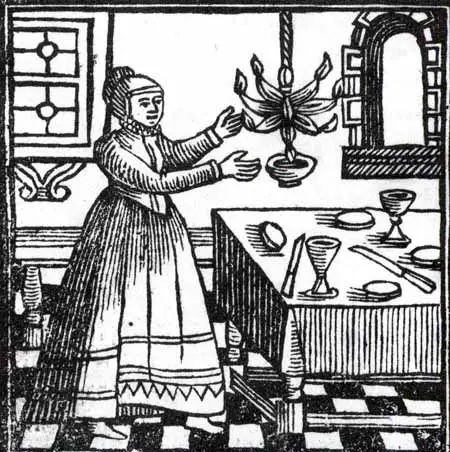
Blessing the Sabbath Candles

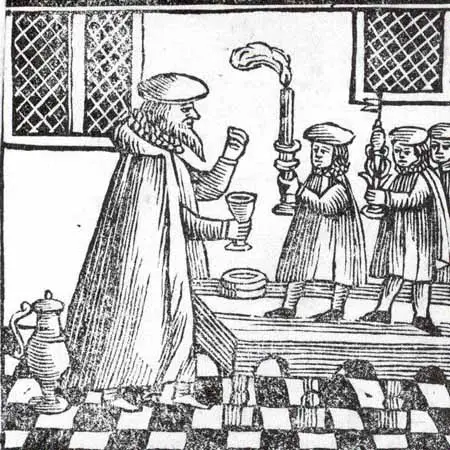
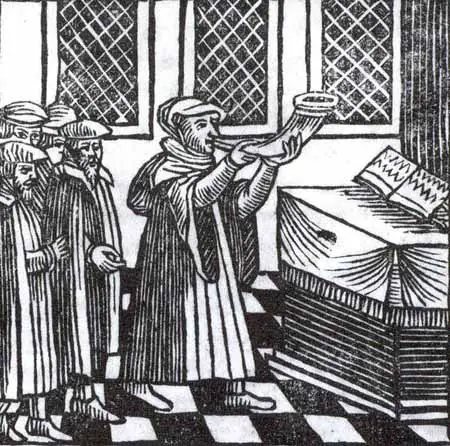
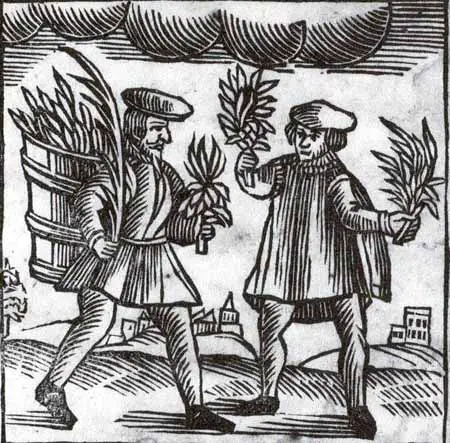
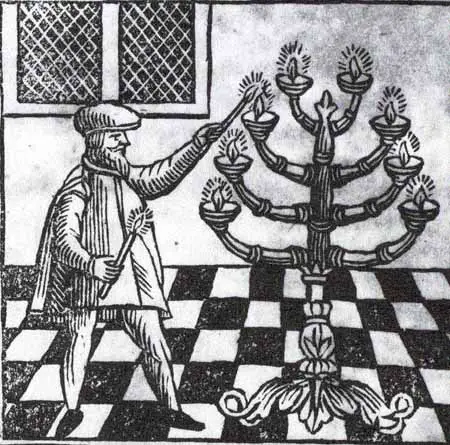
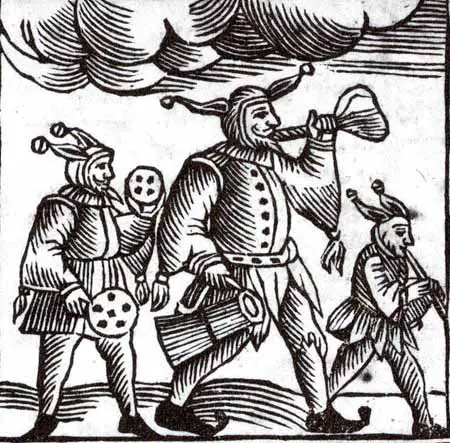
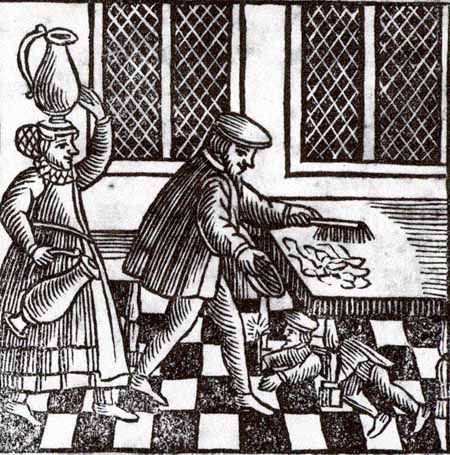
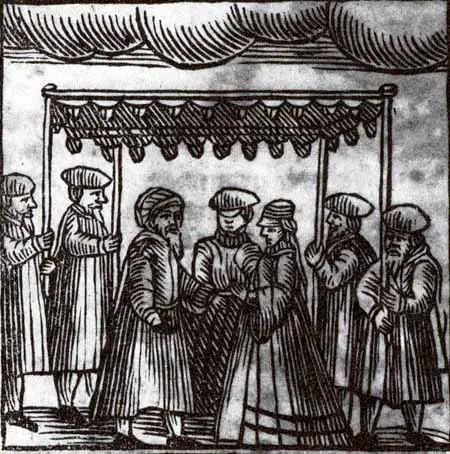
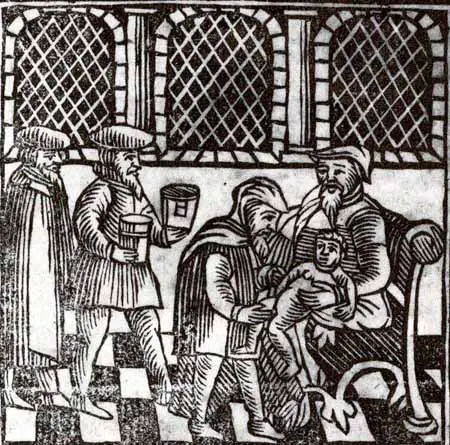
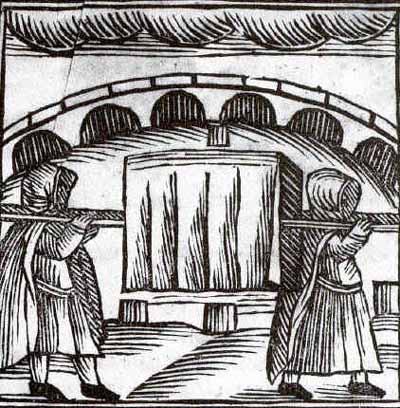
It is impossible to know which customs 18C Jewish immigrants brought with them & observed in the British American colonies.  These woodcuts illustrate Jewish holiday & ritual observances in the 1707 Minhagim (Customs), published by Solomon Proops, Amsterdam, with descriptions & instructions in Yiddish, offer a glimpse of Jewish life at the end of the 17C & the beginning of the 18C in central Europe.

The woodcuts in the book cover Sabbath & holiday observance, & home & synagogue rituals. Among them area mother blessing the Sabbath lights of a Sabbath oil lamp;a father chanting the Havdalah (service of "separation" at the conclusion of the Sabbath), while he holds a cup of wine by the light of a candle held by a child whose sibling holds a spice box; 4 men blessing the new moon;a rabbi preaching on the Great Sabbath (preceding Passover); grinding flour for & baking matzoh; searching for chametz (leaven); & scouring pots & pans. Also shown are a man having his hair cut on Lag B'Omer--the 33rd day of the 50 between Passover & Shavuot, when restrictions obtaining during that period of sernimourning are relaxed; Moses on Sinai receiving the Ten Commandments; worshipers seated on the floor on Tisha B'Av, mourning the destruction of the Temple; the sounding of the shofar on Rosh Hashanah, the New Year; a man building his tabernacle for the Feast of Tabernacles; the gathering of palms, willows, & myrtle to join the citron in its celebration; children receiving sweets to celebrate the Joy of the Law, Simhat Torah; the kindling of a Hanukkah lamp; & Purim jesters sounding their musical instruments.

The life cycle is also marked: bride & groom under the huppah (canopy); an infant boy entering the Covenant of Abraham; & finally, a body borne in a coffin to its eternal resting place. These are some of the 1707 woodcuts:
The Havdalah Service

Sounding the Shofar on Rosh Hashana

The Lulav: Palm Branch, Myrtle, and Willow

Hanukkah, Festival of Lights 

The Merry Festival of Purim

Removing the Leaven from the Home

Under the Huppah, the Wedding Service

Brit Milah, the Circumcision

Carrying the Deceased to the Cemetery

Sunday, November 4, 2018

Reading - 18C American Woman with a Book

Charles Willson Peale (American artist, 1741-1827) Mrs Elias Boudinot IV 1784 holding a journal

University of Delaware’s F. W. Grubb wrote in 1990: Of all European countries perhaps only Scotland surpassed America in literacy by 1800. Not only had the European literacy revolution been transplanted to the American periphery during the colonial period, but colonial literacy had somehow leaped past that of northwestern Europe.

Saturday, November 3, 2018

Biography - Henrietta Benigna Justine Zinzendorf von Watteville (1725-1789) Moravian Educator

Henrietta Benigna Justine Zinzendorf von Watteville (1725-1789) Moravian educator, a key figure in the beginnings of Moravian Seminary & College for Women, Bethlehem, Pa., was born in Berthelsdorf, Saxony. She was the 1st daughter & 2nd of 12 children, of whom only 4 reached maturity, of Count Nicolaus Ludwig von Zinzendorf by his wife, Countess Erdmuthe Dorothea von Reuss. Her father, founder of the Renewed Moravian Church, was of an old family of the Austrian nobility that had migrated to Germany. Her mother was of the nobility of Thuringia. Reared in the 18th-century Moravian Church, Benigna lived & achieved as a devout Pietist.
Henrietta Benigna Justine Zinzendorf von Watteville (1725-1789) with cittern

Her father’s banishment from Saxony, when she was 11, marked the beginning for her of a much-traveled life. With him she came to America for the first time in December 1741, for a stay of 14 months, chiefly in the newly established Moravian communities of Pennsylvania.

On May 4, 1742, at her father’s suggestion, the 16-year-old countess, with 2 assistants, opened a girls’ school in the Ashmead house in Germantown, Pennsylvania. Here 25 pupils were instructed in reading, writing, religion, & the household arts in what was probably the first boarding school for girls in the 13 British American colonies. Seven weeks later the school moved to Bethlehem; & in 1745, to nearby Nazareth, returning permanently in 1749, to Bethlehem, the center of the Moravian Church in America.

Moravian Young Ladie's Seminary and Church, Bethlehem, Pennsylvania

On July 27, 1742, Count von Zinzendorf and his fellowship crossed the Blue Mountain into Cherry Valley, and on July 28 they finally emerged from the endless forests at Meniolågoméka -- "The Fat Land Among the Barren" -- present-day Kunkletown. Von Zinzendorf's 16-year-old daughter, Benigna, upon meeting the Indian children at the settlement, decided that the girls should have the opportunity to go to school just like white boys.

The same year she founded Moravian Seminary in Germantown, Pennsylvania. Shortly thereafter it was moved to Bell House in Bethlehem, and Lady Benigna invited all the Indian girls to come. Moravian Seminary was the first boarding school for girls in the New World, and over time it gained a superb reputation -- so much so that 50 years later, while he was President, George Washington personally petitioned for admission of his great-nieces. Eventually the school's charter was expanded, and it became Moravian College and Moravian Academy, both of which remain to this day.

In the summer of 1742, Benigna Zinzendorf interrupted her teaching to accompany her father on 2 of his 3 trips among the Indians of Pennsylvania & New York, preparatory to establishing missions among them. The Zinzendorfs returned to Europe the following winter.

In 1746 Benigna was married to Baron Johann von Waterville (de Watteville), a Moravian clergyman & her father’s secretary, in a ceremony performed by Zinzendorf at the new Moravian settlement in Zeist, Holland. Consecrated a bishop the following year, Watteville, aided by his capable wife, became out outstanding leader of his church.

The couple came to America on church business in September 1748 & remained a year. On this visit Benigna de Watteville had a hand in the return of the girls’ school to Bethlehem, its consideration with schools in the outlying Moravian congregations, & the enlargement of its curriculum.

Thirty-five years later, en route to America a 3rd time, she was shipwrecked with her husband on the rocks off the Leeward Islands in February 1784. Reaching Bethlehem in June, they remained for 3 years. Again Countess Benigna was on hand to help direct a reorganization of the girls’ seminary, which in 1785, now opened to pupils from outside the Moravian Church, became a largely new institution, known for many years as the Bethlehem Female Seminary.

The Moravian philosophy of education was the rearing of children in a controlled Christian environment under consecrated teachers. Because of the worldwide mission commitments of the Church, many parents were abroad, with their children left behind in the care of the home community. Moravian teachers, therefore, tried as nearly as possible to serve as substitute parents. Both as a parent & as a devout church member, Benigna de Watteville kept this ideal in mind.

She had four children of her own: Johann Ludwig (born 1752), Anna Dorothea Elizabeth (1754), Maria Justine (1762), & Johann Christian Frederick (1766). The older son died while a missionary in Tranquebar, India, in 1780, & the younger son died at nineteen as a student at Herrnhut, the church headquarters on his grandfather’s Berthelsdorf estate. The younger daughter, who never married, served as a worker in the church. The older daughter married Hans Christian Alexander von Schweinitz (later changed to de Schweinitz) in Bethlehem, Pa., in 1779. One of their children was the distinguished American botanist Louis David de Schweinitz, & de Schweinitz descendants have for four generations been prominent in American educational & professional life.

Benigna de Watteville died in the place of her birth at the age of sixty-three, a year after her husband. The Bethlehem seminary, incorporated in 1863 as the Moravian Seminary for Young Ladies, became in 1913, Moravian Seminary & College for Women & in 1953, a part of the coeducational Moravian College at Bethlehem.

Moravian women, whose chief duty was to their community & God, not to their family, husband, or self, worked jobs benefiting the larger community. They were freed from traditional familial duties.

The Moravians 1st came to British America during the colonial period. In 1735 they were part of General Oglethorpe’s philanthropic venture in Georgia. Their attempt to establish a community in Savannah did not succeed, but they did have a profound impact on the young John Wesley who had gone to Georgia during a personal spiritual crisis. Wesley was impressed that the Moravians remained calm during a storm that was panicking experienced sailors. He was amazed at people who did not fear death, & back in London he worshiped with Moravians writing that his “heart was strangely warmed.”

After the failure of the Georgia mission, the Moravians established a permanent presence in Pennsylvania in 1741, settling on the estate of evangalist George Whitefield. Moravian settlers purchased 500 acres to establish the settlement of Bethlehem in 1741. Soon they bought the 5,000 acres of the Barony of Nazareth from Whitefield’s manager, & the 2 communities of Bethlehem & Nazareth became closely linked in their agricultural & industrial economy.  Other settlement congregations were established in Pennsylvania, New Jersey & Maryland. They built the Pennsylvania communities of Bethlehem, Nazareth, Lititz, & Hope. They also established congregations in Philadelphia & on Staten Island in New York. All were considered frontier centers for the spread of the gospel, particularly in mission to the Native Americans. Bethlehem was the center of Moravian activity in colonial America.

Bishop Augustus Spangenberg led a party to survey a 100,000 acre tract of land in North Carolina, which came to be known as Wachau after an Austrian estate of Count Zinzendorf. The name, later anglicized to Wachovia, became the center of growth for the church in that region. Bethabara, Bethania & Salem (now Winston-Salem) were the 1st Moravian settlements in North Carolina. In 1857 the 2 American provinces, North & South, became largely independent & set about expansion. Bethlehem in Pennsylvania & Winston-Salem in North Carolina became the headquarters of the two provinces (North & South).

The facet of Moravian life that bound the community together like no other was their dedication to missionary work; the Moravians were the most active Protestant missionaries of the 18C, sending community members to the West Indies, South America, & as far as South Africa. By 1760, the Moravians had sent out 226 missionaries & baptized more than 3,000 converts, including American Natives. In North America the key undertaking for Moravian missionaries was to convert the Native Americans to Christianity. The Moravians viewed the natives as heathens in need of spiritual enlightenment & guidance.

One feature of Moravian community life was the Choir System. People
were separated into “choirs,” or groups, based on their age, gender, & marital status. It was believed that individuals of like age & gender were best prepared & able to encourage each other’s religious growth. Members of the same choir ate, worked, worshiped, slept in dormitories, & attended school together. This communal living arrangement was intended to strengthen the unity of the society as members had to rely on choir-mates for support rather than their siblings or parents. The names of the choirs reflected the sex, age & marital status of those in the choir, such as the “Older Boys’ Choir,” ages 12-19 or the “Single Sister’s Choir,” age 19 until marriage.

All work performed by the Moravians during the pre-Revolutionary War years operated under a system known as the “General Economy,” in which all goods or money produced was considered the property of the community, not the individual. Under this system there was no private wealth or housing, nor any privately owned businesses. Every member’s contribution was collectively pooled & in exchange, necessities such as food, shelter & clothing were provided.

Marie Minier, a Single Sister in the Bethlehem community, praised the General
Economy in 1750 stating that, “For 12 years now I have enjoyed the care [of the General Economy] & eaten from one bread & been clothed, all of which to this hour has been great and of importance to me. I . . . accept things the way the Brethren do things, for it is a wonder to me daily that He has maintained so large a community, & we cannot say that we have ever gone without.” For single women like Marie Minier, the General Economy system afforded them relative security & independence; single women who chose not to marry did not need to rely on a father or brother for financial support, nor worry about becoming a financial burden. In other parts of 18C British America women who did not marry usually would have been socially & economically excluded, dependent on their fathers or male family members.

Yet by the 1760s, the system of communal property began to wear on the younger generations of ambitious Moravians who saw that in other communities hard work was rewarded with personal financial gain. In 1762, the General Economy was abolished in favor of self-owned & operated small businesses & private family homes.

To learn about the lives of 18C Moravian women see:

Faull, Katharine. Moravian Women's Memoirs: Their Related Lives, 1750-1820. Syracuse: Syracuse University Press, 1997.

Smaby, Beverly Prior. "Female Piety Among 18th-Century Moravians." Pennsylvania History 64 (1997): 151-167.

Wachovia Historical Society, Winston-Salem, North Carolina & Old Salem, Inc., Winston-Salem, North Carolina 1750 Johann Valentine Haidt (1700-1780). Women portrayed as separate but sharing power at the Moravian Synod at Herrnhut.& "Forming the Single Sisters' Choir in Bethlehem." The Transactions of the Moravian Historical Society 28 (1994): 1-14

Sommer, Elisabeth W. Serving Two Masters: Moravian Brethren in Germany & North Carolina, 1727-1801. Lexington: The University Press of Kentucky, 2000.

Vogt, Peter. "A Voice for Themselves: Women as Participants in Congregational Discourse in the 18th-Century Moravian Movement." In Women Preachers and Prophets through Two Millennia of Christianity, edited by Beverly Mayne Kienzle and Pamela J. Walker, 227-247. Berkeley: University of California Press, 1998.

This posting based, in part, on information from Notable American Women edited by Edward T James, Janet Wilson James, Paul S Boyer, The Belknap Press of Harvard University, Cambridge, Massachusetts. 1971

Friday, November 2, 2018

Reading - 18C American Woman with a Book

1784 Ralph Earl (American artist, 1751-1801) Anne Whiteside Earl the artist's wife studying at a map

Historian Gloria Main writes, “Traditional female roles did not require” literacy, & powerful prejudices worked to inhibit the public exercise of trained intelligence by women. At some point in the modernizing process, nonetheless, female literacy also began to expand. For this to have occurred, society must first have enlarged its assessment of female capability before liberalizing the scope of permissible feminine activity."

Thursday, November 1, 2018

Portraits of 18C American Moravian Women

Mrs. Gertraut Graff. Johann Valentin Haidt (1700-1780) Moravian Archives, Bethlehem, Pennsylvania.

Johann Valentin Haidt (Heydt) was born in Danzig (GdaƄsk), Poland, on October 4, 1700. Haidt came from a long line of goldsmiths learning the trade from his father, Andreas Haidt, a jeweler & sculptor for Emperor Frederick I in the Prussian royal court. Between the ages of 10-13, Haidt studied drawing at the Royal Academy of Arts in Berlin, where his father was an instructor.
Miss Anna Rosina Anders. Johann Valentin Haidt (1700-1780) Moravian Archives, Bethlehem, Pennsylvania.

In 1754, Haidt left England to become the assistant pastor of a Moravian church in Philadelphia, where he continued to paint & teach painting. By the fall of 1755, he was living in Bethlehem, Pennsylvania, then the center of the Moravian church in this country.
Married Moravian Woman. Johann Valentin Haidt (1700-1780) Moravian Archives, Bethlehem, Pennsylvania.

Haidt felt that portrait painting also was important in order to express the spirit within the person. He wrote in his treatise, "One applies all energy to the face, so that it predominates above all...Each figure must immediately depict why is has been drawn...A portrait is beautiful when it is an accurate likeness and when one can see the essence of the person's face and spirit. Therefore, painters who want to paint all faces happy and make the mouths smile make a mistake. The painter must look accurately at the person he wants to paint. If he gets the opportunity to know the subject well, it is a great help to him."
Mrs. Elizabeth Boehler. Johann Valentin Haidt (1700-1780) Moravian Archives, Bethlehem, Pennsylvania.

Haidt's portraits of women seem to portray them as spiritual, happy, & content with their roles in Moravian community life under Zinzendorf's leadership.
Married Moravian Woman. Johann Valentin Haidt (1700-1780) Moravian Archives, Bethlehem, Pennsylvania.

The artist in Haidt did worry about the lack of color choices for his portraits of his plain-clothed congregation. "The clothes should be chosen by the painter according to the complexion of the person, as well as the background, but one will not find it easy to put this rule into practice in the congregation, so a good portrait can never or at least very seldom be painted" of fellow Moravians.
Married Moravian Woman. Johann Valentin Haidt (1700-1780) Moravian Archives, Bethlehem, Pennsylvania.

The women wore the traditional Mittel-European two-layer headdress or Haube. The only colorful aspect of their clothing were the ribbons they wore: red for young girls, pink for eligible maidens, blue for wives, and white for widows.
Mrs. C. Theodora Neissen. Johann Valentin Haidt (1700-1780) Moravian Archives, Bethlehem, Pennsylvania.

One Pennsylvania reader writes of the costumes, especially the tightly-fitted jackets, "Look at the lacing, the weasel waists, the odd little notch in the sleeve and the way the kerchief is arranged. 'Curiouser and curiouser,' said Alice, quite forgetting her grammar."
Anna Maria Lawatsch. Johann Valentin Haidt (1700-1780) Moravian Archives, Bethlehem, Pennsylvania.

Johann and Susanna Nitschmann. Johann Valentin Haidt (1700-1780) Moravian Archives, Bethlehem, Pennsylvania.

Young Moravian Girl. Johann Valentin Haidt (1700-1780) Moravian Archives, Bethlehem, Pennsylvania.

1754 John Valentine Haidt (1700-1780), Johannetta Maria Kymbel (1725-1789) Mrs John Ettwein. Moravian Historica Society, Nazareth, Pennsylvania.

Miss Anna Nitschmann. Johann Valentin Haidt (1700-1780) Moravian Archives, Bethlehem, Pennsylvania.

Many of Haidt's American paintings recording this period, its religion, & its people are located at the Moravian Archives & College in Bethlehem, Pennsylvania; the Moravian Historical Society in Nazareth, Pennsylvania; the Moravian Congregation, Lititz, Pennsylvania, and at the Historical Society of Pennsylvania, Philadelphia, Pennsylvania
Widow Catharina Huber. Johann Valentin Haidt (1700-1780) Moravian Archives, Bethlehem, Pennsylvania.

To learn about the lives of 18C Moravian women see:

Faull, Katharine. Moravian Women's Memoirs: Their Related Lives, 1750-1820. Syracuse: Syracuse University Press, 1997.

Smaby, Beverly Prior. "Female Piety Among 18th-Century Moravians." Pennsylvania History 64 (1997): 151-167.

Wachovia Historical Society, Winston-Salem, North Carolina & Old Salem, Inc., Winston-Salem, North Carolina 1750 Johann Valentine Haidt (1700-1780). Women portrayed as separate but sharing power at the Moravian Synod at Herrnhut.& "Forming the Single Sisters' Choir in Bethlehem." The Transactions of the Moravian Historical Society 28 (1994): 1-14

Sommer, Elisabeth W. Serving Two Masters: Moravian Brethren in Germany & North Carolina, 1727-1801. Lexington: The University Press of Kentucky, 2000.

Vogt, Peter. "A Voice for Themselves: Women as Participants in Congregational Discourse in the 18th-Century Moravian Movement." In Women Preachers and Prophets through Two Millennia of Christianity, edited by Beverly Mayne Kienzle and Pamela J. Walker, 227-247. Berkeley: University of California Press, 1998.